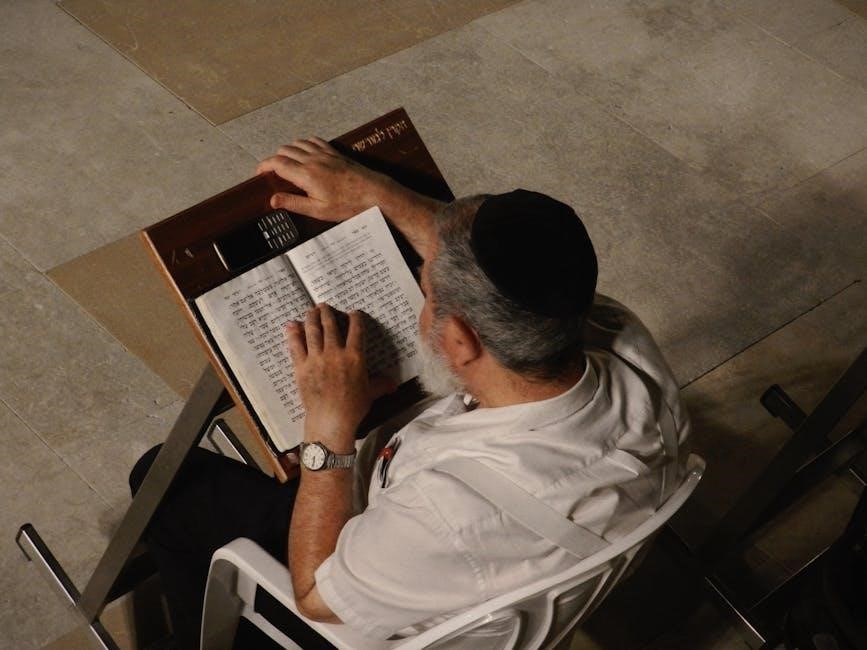
Jewish daily prayers, a cornerstone of Jewish life, offer a structured way to connect with God․ Resources like readily available Jewish daily prayers PDF documents and siddurim facilitate consistent practice․ These texts enable individuals to engage in meaningful worship, fostering spiritual growth and community connection․
What are Jewish Daily Prayers?
Jewish daily prayers are a set of prescribed prayers recited by observant Jews at specific times each day․ These prayers aren’t simply requests; they represent a profound dialogue with God, encompassing praise, thanksgiving, and supplication․ The structure and content of these prayers have evolved over centuries, rooted in biblical verses and rabbinic interpretations․
Central to these prayers is the Amidah, also known as the Shemoneh Esrei, a standing prayer consisting of nineteen blessings․ Other key components include the Shema, a declaration of God’s oneness, and various Psalms and hymns․ The entire service is designed to be a holistic spiritual experience, engaging the mind, body, and soul․

Accessibility to these prayers is greatly enhanced by the availability of Jewish daily prayers PDF resources․ These digital texts allow individuals to easily access the prayers for personal study or communal worship, regardless of location․ Many siddurim (prayer books) are now offered in PDF format, providing a convenient and cost-effective way to engage with Jewish tradition․
The purpose extends beyond fulfilling a religious obligation․ It’s about cultivating a constant awareness of God’s presence in one’s life, fostering gratitude, and seeking guidance․ Utilizing Jewish daily prayers PDF versions allows for greater flexibility and personalization in one’s spiritual practice, making it easier to integrate prayer into a busy modern lifestyle․ These resources are invaluable tools for both beginners and seasoned practitioners․

Core Components of the Daily Prayer Service
The Jewish daily prayer service, accessible through resources like Jewish daily prayers PDF versions, is structured around several core components․ The Shema, a declaration of faith proclaiming “Hear, O Israel, the Lord our God, the Lord is One,” is central, affirming monotheism․ It’s often recited in both morning and evening services․
The Amidah, or Standing Prayer, is arguably the most significant part․ This nineteen-blessing prayer covers themes of praise, supplication, and thanksgiving․ Its structure remains consistent, though specific requests can be added․ Finding a clear Jewish daily prayers PDF with transliteration aids proper pronunciation and understanding․
Pesukei d’Zimra, introductory Psalms and hymns, prepare the worshiper’s heart for prayer․ These verses express gratitude and acknowledge God’s greatness․ The Kaddish, a prayer glorifying God’s name, is recited at various points, often in memory of loved ones․
Many services include additional readings from the Torah and Prophets․ Accessing a comprehensive Jewish daily prayers PDF allows individuals to follow along and understand the context of these readings․ The service concludes with a final Kaddish and often a blessing․ These components, when practiced regularly, aim to deepen one’s connection with faith and community, readily available through digital resources․

Specific Daily Prayer Services
Jewish tradition mandates three daily prayer services: Shacharit (morning), Mincha (afternoon), and Ma’ariv (evening)․ Each service possesses a unique character and emphasis, all conveniently found within a complete Jewish daily prayers PDF resource․
Shacharit, recited after sunrise, focuses on gratitude for the gift of life and acknowledging God’s sovereignty․ It includes the Shema and a longer Amidah․ Many communities incorporate Torah readings into the Shacharit service․ A well-formatted Jewish daily prayers PDF will clearly delineate these sections․
Mincha, offered in the afternoon, is shorter than Shacharit․ It serves as a transition between the day’s activities and the evening․ The Amidah is adapted to reflect the time of day․ Finding a Jewish daily prayers PDF with appropriate page markers simplifies navigating between services․
Ma’ariv, recited after nightfall, expresses gratitude for the day’s blessings and acknowledges God’s protection during sleep․ It includes a shorter Shema and Amidah․ Some communities recite the Kiddush Levanah, a prayer sanctifying the new moon, after Ma’ariv․ Utilizing a digital Jewish daily prayers PDF allows for easy access and portability, enabling consistent practice wherever you are․
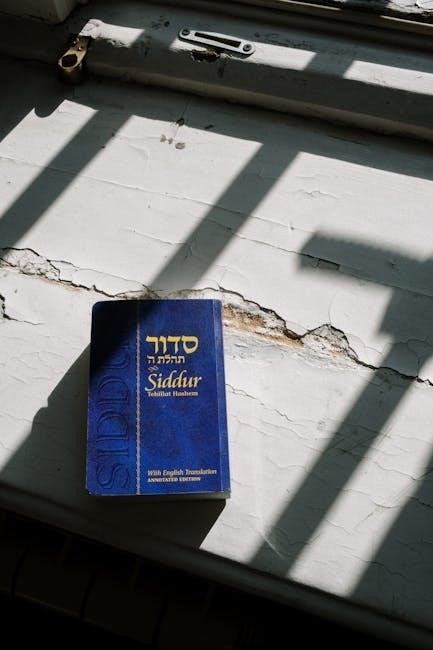
Resources for Jewish Daily Prayers in PDF Format
Jewish daily prayers PDF versions offer convenient access to traditional texts․ Numerous siddurim are available for download, providing complete services․ Online platforms also host printable prayer texts, supporting consistent practice and study for all․
Popular PDF Prayer Books and Siddurim
Exploring readily available PDF siddurim provides a fantastic entry point for individuals seeking to incorporate regular Jewish daily prayer into their lives․ Several options cater to different preferences and levels of familiarity with the liturgy․ The Siddur Lev Yisrael, often found in PDF format, is a widely used Ashkenazi siddur known for its clear layout and helpful translations․
For those following Sephardi traditions, the Siddur Tehillat Hashem is a popular choice, and digital PDF copies are easily accessible․ Many communities also offer their own customized siddurim as PDFs, reflecting local customs and interpretations․ Koren Publishers offers beautifully formatted siddurim, including the Koren Sacks Siddur, which is available in digital formats and features insightful commentary․
ArtScroll publishes comprehensive siddurim with extensive explanations and translations, and their publications are frequently found as downloadable PDFs․ These are particularly helpful for beginners or those wanting a deeper understanding of the prayers․ Additionally, websites dedicated to Jewish learning often compile links to various PDF siddurim, offering a diverse range of options․ When selecting a PDF siddur, consider your specific nusach (prayer tradition) and whether you prefer a more traditional or contemporary presentation․ Ensure the PDF is from a reputable source to guarantee accuracy and proper formatting for meaningful prayer experience․
Remember to check for copyright restrictions before distributing any PDF siddurim․
Online Resources Offering Printable Prayer Texts
Numerous websites provide access to Jewish daily prayer texts suitable for printing, offering convenience for those preferring a physical copy alongside digital Jewish daily prayers PDF options․ Sefaria (sefaria․org) stands out as a comprehensive resource, offering the full Hebrew and English text of the siddur, allowing users to easily copy and paste prayers for personal use or create custom printouts․
Hebcal (hebcal;com) provides daily prayer times alongside printable versions of key prayers like the Shema and the Amidah․ My Jewish Learning (myjewishlearning․com) features articles explaining the prayers and often includes printable excerpts․ Chabad․org offers a wealth of information on Jewish practice, including downloadable prayer texts and guides․
Many synagogues and Jewish community centers also make prayer texts available on their websites, often in PDF format․ These resources can be particularly valuable for accessing texts aligned with specific nusachim (prayer traditions)․ When utilizing online resources, it’s crucial to verify the accuracy of the text, especially when printing for communal use․ Look for sources affiliated with established Jewish organizations or rabbinical authorities;
Furthermore, consider utilizing browser extensions or online tools designed to remove website clutter and format text for optimal printing․ Always respect copyright restrictions and avoid unauthorized distribution of copyrighted materials․ These online resources empower individuals to engage in daily prayer with accessibility and convenience․

Understanding Prayer Times and Observance
Jewish daily prayers are linked to specific times determined by sunrise and sunset․ Utilizing a Jewish daily prayers PDF schedule alongside a reliable calendar helps ensure timely observance․ Accurate timing enhances the spiritual significance of each prayer service․
Calculating Prayer Times Based on Sunrise and Sunset
Determining the precise times for Jewish daily prayers relies heavily on calculating sunrise and sunset․ These times aren’t simply observed; they’re adjusted using various halakhic (Jewish legal) calculations․ A Jewish daily prayers PDF often includes charts or instructions for these calculations, though many rely on readily available apps and websites today․
The core principle involves dividing the daylight hours into specific portions allocated to each prayer service․ Shacharit (morning prayer) has a latest time for recitation, generally within a few hours of sunrise․ Mincha (afternoon prayer) begins after midday – often defined as halfway between sunrise and sunset – and extends until sunset․ Maariv (evening prayer) commences after sunset, with a specific period allowed for its performance․
These calculations aren’t uniform․ Different Jewish communities (nusachim) employ slightly varying methods․ For example, the Chabad community often uses a stricter definition of sunset, adding a few minutes after the sun has fully disappeared below the horizon․ A comprehensive Jewish daily prayers PDF resource will often specify which nusach the times are based on․
Furthermore, geographical location significantly impacts these calculations․ Prayer times in New York City will differ from those in Los Angeles due to variations in daylight length․ Many Jewish daily prayers PDF resources allow users to input their location for personalized prayer times․ Understanding these nuances ensures accurate and meaningful prayer observance․
Variations in Prayer Customs
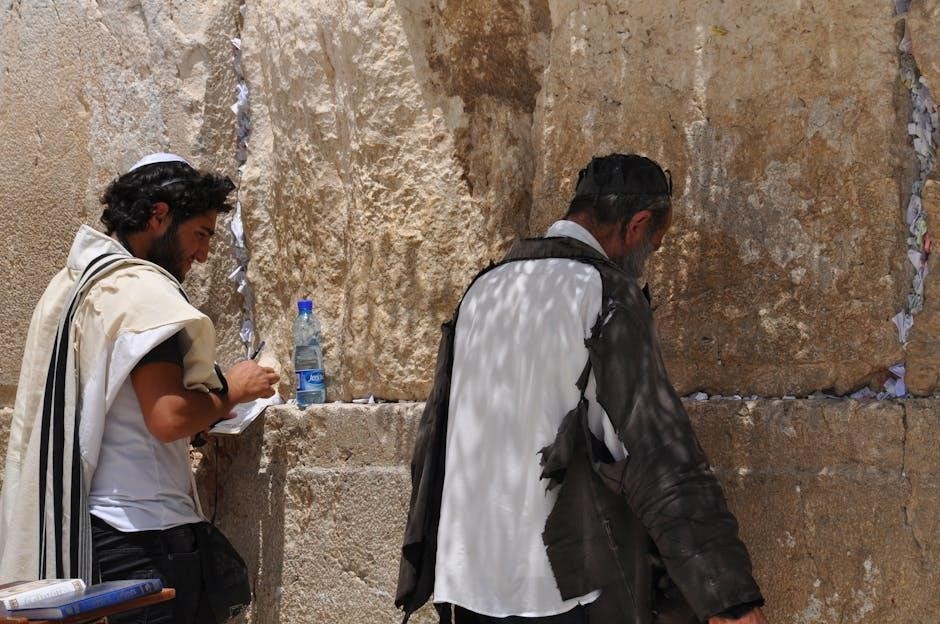
Jewish daily prayers exhibit diverse customs․ Jewish daily prayers PDF resources often showcase Ashkenazi, Sephardi, and other nusachim variations․ Praying individually versus communally also impacts practice, with communal prayer holding heightened significance․
Ashkenazi, Sephardi, and Other Nusachim
Nusachim, meaning “customs” or “rites,” represent the diverse liturgical traditions within Jewish prayer․ Understanding these variations is crucial when utilizing Jewish daily prayers PDF resources, as texts often reflect a specific nusach․ The three primary nusachim are Ashkenazi, Sephardi, and Edut HaMizrach (also known as Iraqi or Babylonian)․
Ashkenazi prayer customs originated in Central and Eastern Europe and are characterized by distinct melodies, pronunciations of Hebrew, and specific textual emphases․ A Jewish daily prayers PDF geared towards Ashkenazi practice will include these unique elements․
Sephardi nusach, stemming from the Iberian Peninsula, differs significantly in pronunciation, melodic structure, and certain prayer formulations․ Sephardi Jewish daily prayers PDF versions will reflect these distinctions, often featuring a more lyrical and flowing style․
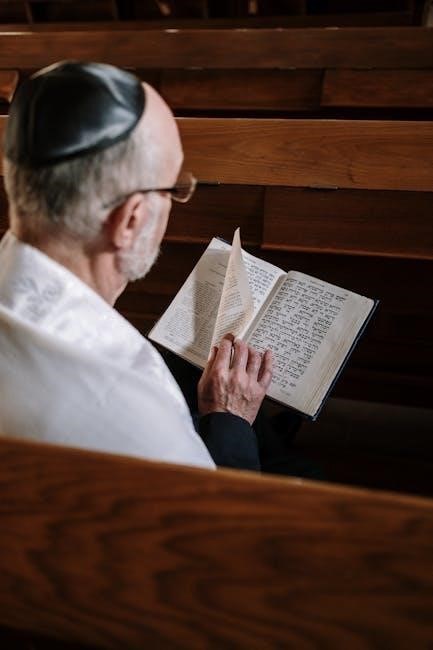
Edut HaMizrach represents the traditions of Jews from the Middle East and North Africa․ This nusach blends elements of both Ashkenazi and Sephardi customs, possessing its own unique character․ Finding a dedicated Jewish daily prayers PDF for Edut HaMizrach can sometimes be more challenging, but resources are becoming increasingly available․
Beyond these three main traditions, smaller communities maintain their own distinct nusachim, adding to the richness and complexity of Jewish liturgical practice․ When selecting a Jewish daily prayers PDF, it’s essential to identify the nusach it represents to ensure alignment with one’s personal or communal tradition․
Praying Alone vs․ Communally
Jewish tradition values both individual and communal prayer, recognizing the unique benefits of each․ Whether utilizing a Jewish daily prayers PDF for personal devotion or participating in a group service, the core principles remain consistent․ However, the experience and certain halakhic (Jewish law) considerations differ․
Praying alone, often referred to as tefillah be-yachid, allows for focused introspection and a deeply personal connection with God․ A Jewish daily prayers PDF becomes a vital tool for those who pray individually, providing the necessary text and structure․ While certain prayers, like the Shema, can be recited privately, there are nuances regarding proper concentration and intention․
Communal prayer, or tefillah be-tzibbur, is considered highly meritorious․ The presence of a minyan (a quorum of ten Jewish adults) enhances the sanctity of the service and allows for the recitation of prayers that require communal participation, such as the Kaddish and Unetaneh Tokef․
When praying communally, following the shaliach tzibbur (prayer leader) is customary․ While a Jewish daily prayers PDF might be used as a personal guide, the leader’s pronunciation and pace generally take precedence․
Ultimately, both forms of prayer are valued․ A Jewish daily prayers PDF serves as a versatile resource, enabling individuals to fulfill their obligation to pray regardless of their circumstances, whether in solitude or alongside a community․

Additional Prayers and Blessings
Beyond core services, numerous supplemental prayers and blessings enrich Jewish life․ A Jewish daily prayers PDF often includes these, like Birkat Hamazon (grace after meals) and prayers for healing․ These additions deepen spiritual practice․
Prayers for Special Occasions
Jewish daily prayers extend far beyond the routine, encompassing a rich tapestry of supplications for life’s significant moments․ A comprehensive Jewish daily prayers PDF resource will invariably include these specialized blessings and petitions, categorized for ease of access and appropriate usage․ These aren’t simply additions; they are integral to experiencing Jewish life in its fullness․
For joyous occasions, such as weddings (Kiddushin and Sheva Brachot), a siddur or dedicated PDF will provide specific blessings expressing gratitude and hope for a blessed union․ Similarly, welcoming a new baby (Brit Milah or Simchat Bat) involves unique prayers of thanksgiving and commitment to raising the child in the Jewish faith․ These prayers often include passages from Psalms and other biblical texts․
Conversely, times of sorrow and hardship are also addressed with specific prayers․ The El Malei Rachamim prayer, a poignant memorial prayer, is recited for the departed, seeking comfort for the bereaved and eternal peace for the soul․ Prayers for healing (Mi Sheberach) are offered for those facing illness, invoking divine mercy and a swift recovery․ A well-organized Jewish daily prayers PDF will clearly delineate these prayers, offering both Hebrew text and transliteration, alongside English translations to facilitate understanding and heartfelt participation․
Furthermore, prayers for national events, such as Yom HaZikaron (Israel’s Memorial Day) and Yom HaAtzmaut (Israel’s Independence Day), demonstrate the Jewish people’s collective identity and connection to the land of Israel․ These specialized prayers underscore the importance of remembering the past and looking forward to a future of peace and security․ Accessing these through a readily available PDF ensures their preservation and continued use․